

What generative AI means for Irish SMEs
Generative AI Ireland means using AI tools that can create, summarise, rewrite, analyse or structure content for real business work. For Irish SMEs, the first value is usually not a dramatic transformation project. It is saving time on repeated writing, customer questions, internal notes, sales support, research, admin and staff knowledge.

The short answer
Generative AI is a type of artificial intelligence that produces new text, images, code, summaries, plans, answers or ideas from a prompt. A staff member gives the system instructions, examples or business context, and the system generates a draft response.
That draft still needs human judgement. AI can be quick, useful and surprisingly capable, but it can also make mistakes, invent details, misunderstand context or expose sensitive information if it is used badly.
For an Irish SME, the practical question is not “Should we use AI everywhere?” The better question is: “Which repeated task can we improve safely this month?”
How generative AI is different from older AI tools
Older business AI often focused on prediction, classification or automation. It might score a sales lead, detect fraud, route a ticket or forecast demand.
Generative AI is different because it can create a first draft. It can write a customer email, turn meeting notes into actions, summarise reviews, draft social posts, prepare staff training notes, create FAQ answers, translate rough ideas into clearer copy or help build a knowledge base.
That makes it useful for smaller businesses because many first projects do not need a large data science team. They need clear goals, approved business information, staff training and sensible review.
Where Irish SMEs can use generative AI first
The safest starting points are usually internal, repetitive and easy to review. Irish CSO data shows AI use in Ireland is growing, but small businesses are still behind larger enterprises. That gap matters. SMEs do not need to copy enterprise AI programmes. They need smaller projects that remove daily friction.
Customer support and enquiry handling

Generative AI can help answer common customer questions, prepare reply drafts and route enquiries to the right person. A trades business might use it to respond to service-area questions. A clinic might use it to prepare non-medical admin replies. A hotel, retailer or professional service firm might use it to answer opening hours, booking, pricing, location or service questions.
This is where ThinkAI’s intelligent chatbots can help, provided the chatbot is grounded in approved pages, policies and handoff rules.
Content, sales and marketing support

Generative AI can help with blog outlines, email drafts, proposal sections, LinkedIn posts, product descriptions, case-study drafts and local landing-page copy. It should not replace your judgement or brand voice. It should help a busy team get from a blank page to a better first draft.
For search, AI content should still be useful, accurate and grounded in the business. A generic article that says the same thing as everyone else will not build trust. A better use is turning real expertise, client questions and service knowledge into clearer content.
Operations, admin and staff knowledge
Many Irish SMEs have the same problem: useful knowledge is spread across emails, documents, spreadsheets, WhatsApp messages and people’s heads. Generative AI can help turn that knowledge into checklists, process notes, onboarding guides, call summaries and internal FAQs.
ThinkAI’s AI integration and automation work is most useful when AI is connected to the right business systems and rules, rather than used as a loose tool with no structure.
What Irish data says about AI adoption
The CSO reported that 20.2% of Irish enterprises used AI technologies in 2025. Use was much higher among large enterprises than small enterprises, with 57.7% of large businesses using AI compared with 17.2% of small businesses.
That does not mean small firms are too late. It means there is still room to gain an advantage with practical projects. CSO also found common AI purposes included business administration, marketing or sales, ICT services, innovation, accounting, production and logistics.
Across Europe, Eurostat reported that 20.0% of EU enterprises with at least 10 employees used AI in 2025, up from 13.5% in 2024. The most common uses included analysing written language and generating written, spoken or visual content.
The direction is clear. AI is moving from novelty to normal business tooling.
The risks to manage before staff start using AI
Generative AI creates value because it is easy to use. That is also the risk.
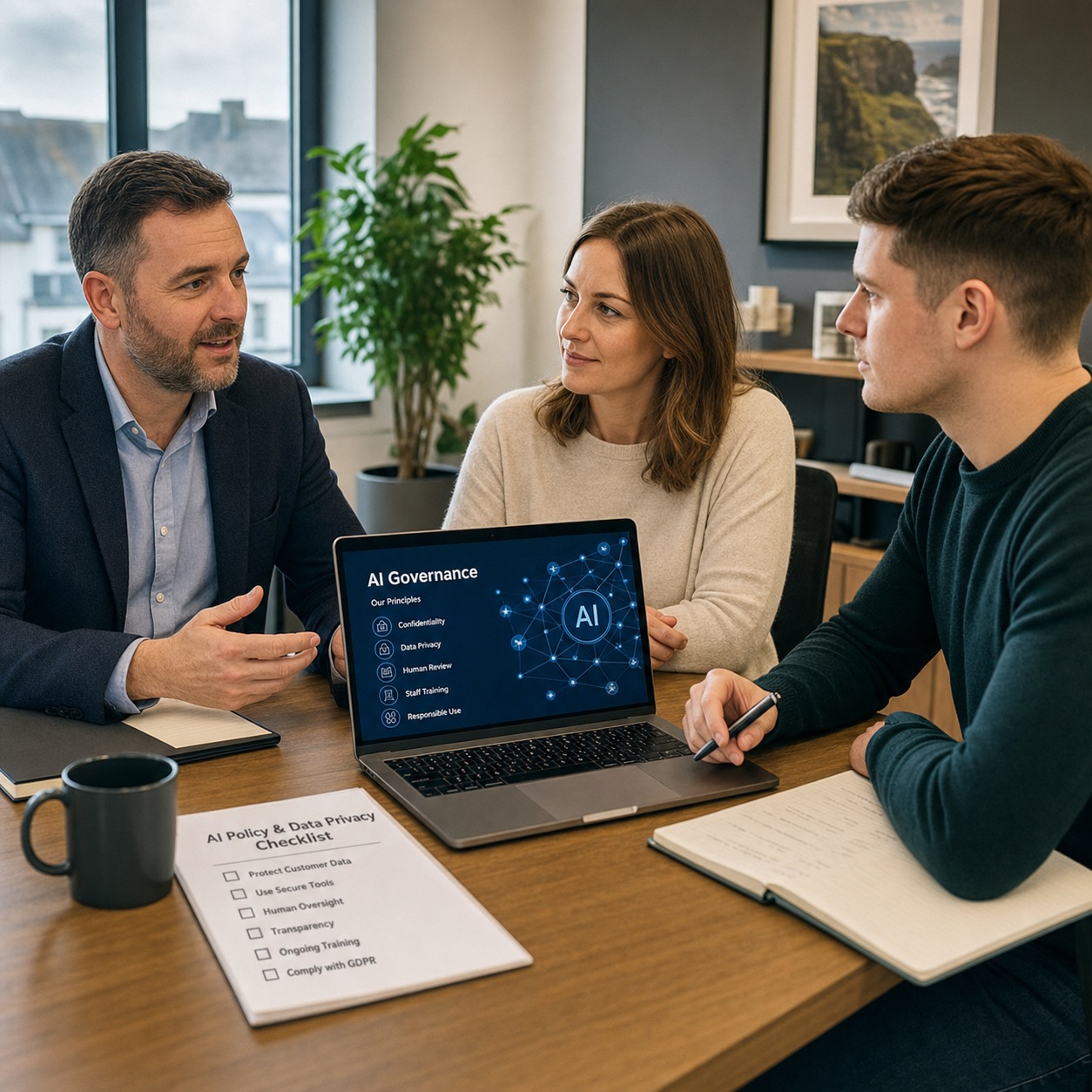
Staff should not paste sensitive customer details, health information, financial records, contracts or private employee information into public AI tools without clear approval. The Irish Data Protection Commission warns organisations to understand what personal data an AI product uses, where that data goes, whether it is retained or reused, and how GDPR rights and obligations are met.
Accuracy also matters. AI can produce confident but wrong answers. If a generated answer affects pricing, contracts, complaints, employment, credit, health, legal matters or customer rights, a person should review it.
The EU AI Act also brings AI literacy into the business conversation. European Commission guidance says organisations using AI systems should ensure staff have enough knowledge to understand the tools, risks and context. In simple terms: do not give staff AI tools without rules, training and examples of what good use looks like.
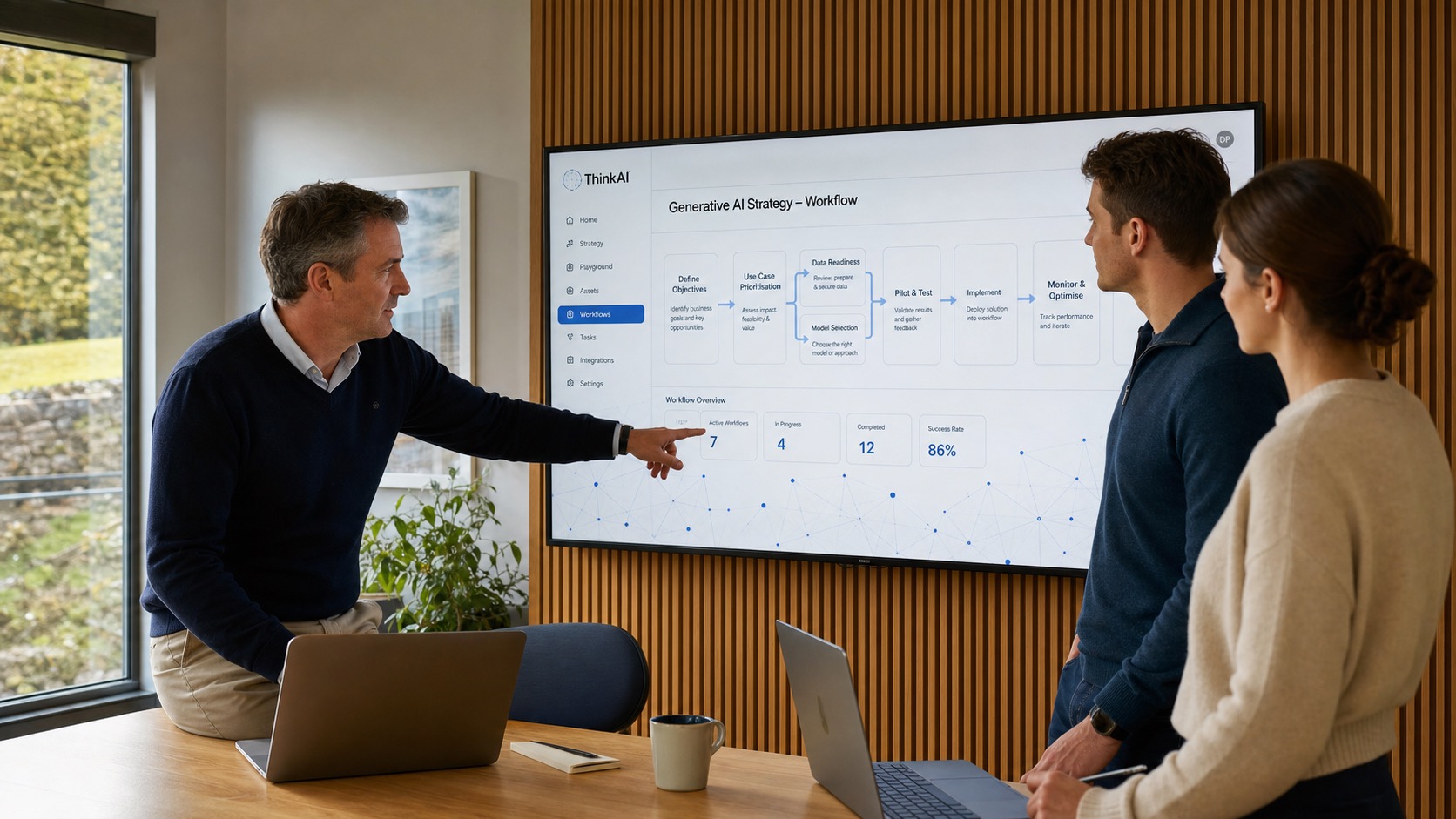
A sensible first 30-day plan
Start with one workflow. Do not begin with “AI transformation”.
In week one, list the repeated tasks that take time every week. Look for customer questions, internal admin, content drafts, proposal writing, meeting notes, review summaries, service explanations or staff onboarding.
In week two, choose one use case and gather approved source material. That might include service pages, FAQs, tone guidance, policies, product sheets, pricing rules or process notes.
In week three, test AI with staff using real examples. Compare the AI output with what a good team member would write. Note where it is useful, where it is wrong and where human review is required.
In week four, write a simple AI-use policy. Include what staff can use AI for, what data must never be entered, who reviews outputs, and when a task must be escalated to a person.
If the workflow proves useful, then look at a more structured project with AI strategy support. Strategy is not paperwork for its own sake. It is how you choose the right use case, reduce risk and avoid buying tools nobody uses.
Key takeaways
- Generative AI creates drafts, summaries, answers, plans, images and structured content from prompts.
- Irish SMEs should start with repeated, low-risk work that is easy to review.
- Useful first projects include enquiry drafts, content support, staff notes, internal FAQs and process documentation.
- GDPR, confidentiality, accuracy and staff training need to be handled before rollout.
- The best AI projects connect tools to approved business information and clear human handoff.
Conclusion
Generative AI will not fix a weak process on its own. It will not replace customer trust, local knowledge or commercial judgement.
Used well, it can help Irish SMEs respond faster, explain services more clearly, support staff and reduce repetitive work. The sensible path is to start small, govern the risks and build from proven use cases.
Request a consultation with ThinkAI to plan a practical generative AI project for your business.
Frequently Asked Questions
What is generative AI?
Generative AI is AI that creates new text, images, code, summaries, plans or answers from instructions called prompts.
Is generative AI useful for Irish SMEs?
Yes. It is useful for repeated writing, customer questions, staff notes, content drafts, internal FAQs and admin support.
What is the easiest first AI project?
Start with one repeated task, such as enquiry replies, meeting summaries, content drafts or internal process notes.
Can generative AI replace staff?
No. It should support staff by drafting and summarising work, while people keep control of judgement and customer care.
Is it safe to put customer data into AI tools?
Not without clear approval. Avoid sensitive personal data and check where the tool stores or reuses information.
Does the EU AI Act affect Irish SMEs?
Yes, depending on how AI is used. AI literacy, transparency and risk-aware use are becoming practical business requirements.
Can AI write our website content?
It can help draft content, but the final version should be accurate, specific to your business and reviewed by a person.
How should we start with ThinkAI?
Start with a short consultation to choose one use case, define the source material, set rules and test the workflow.
About the Author
Declan Foley is the founder of ThinkAI.ie and Creative Director at Designwest. He helps Irish businesses unlock growth through AI-powered strategy and digital innovation. Explore how ThinkAI can support your business at ThinkAI.ie.
