

Why AI Adoption Fails in Many Irish Businesses
Artificial Intelligence (AI) is poised to add over €250 billion to Ireland’s GDP by 2035. From smart chatbots to predictive analytics, AI promises innovation, efficiency, and savings. Yet despite 98% of Irish organisations exploring AI, only 6% have deployed it at scale. Why? Many businesses are held back by common AI strategy mistakes that are entirely avoidable.
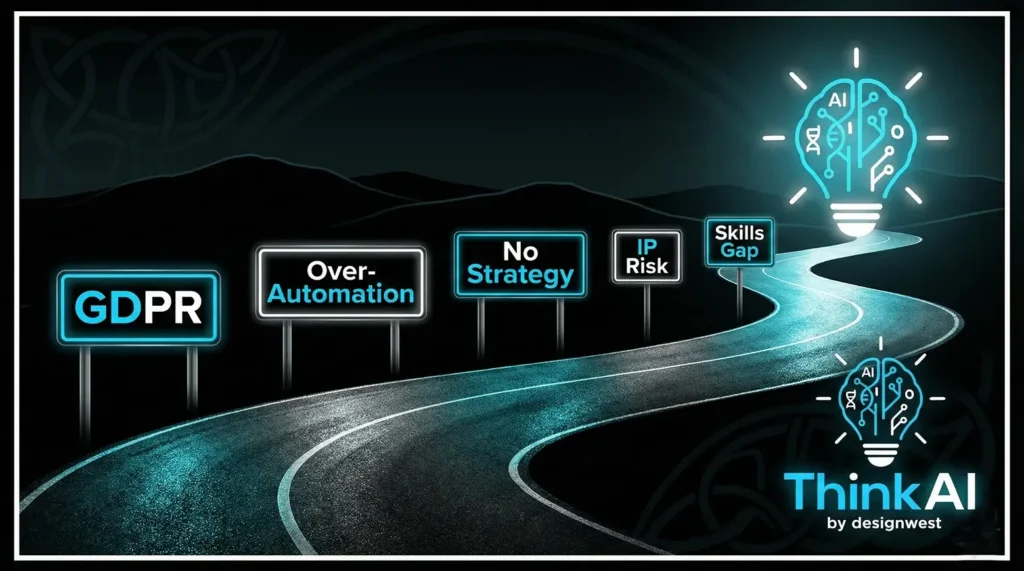
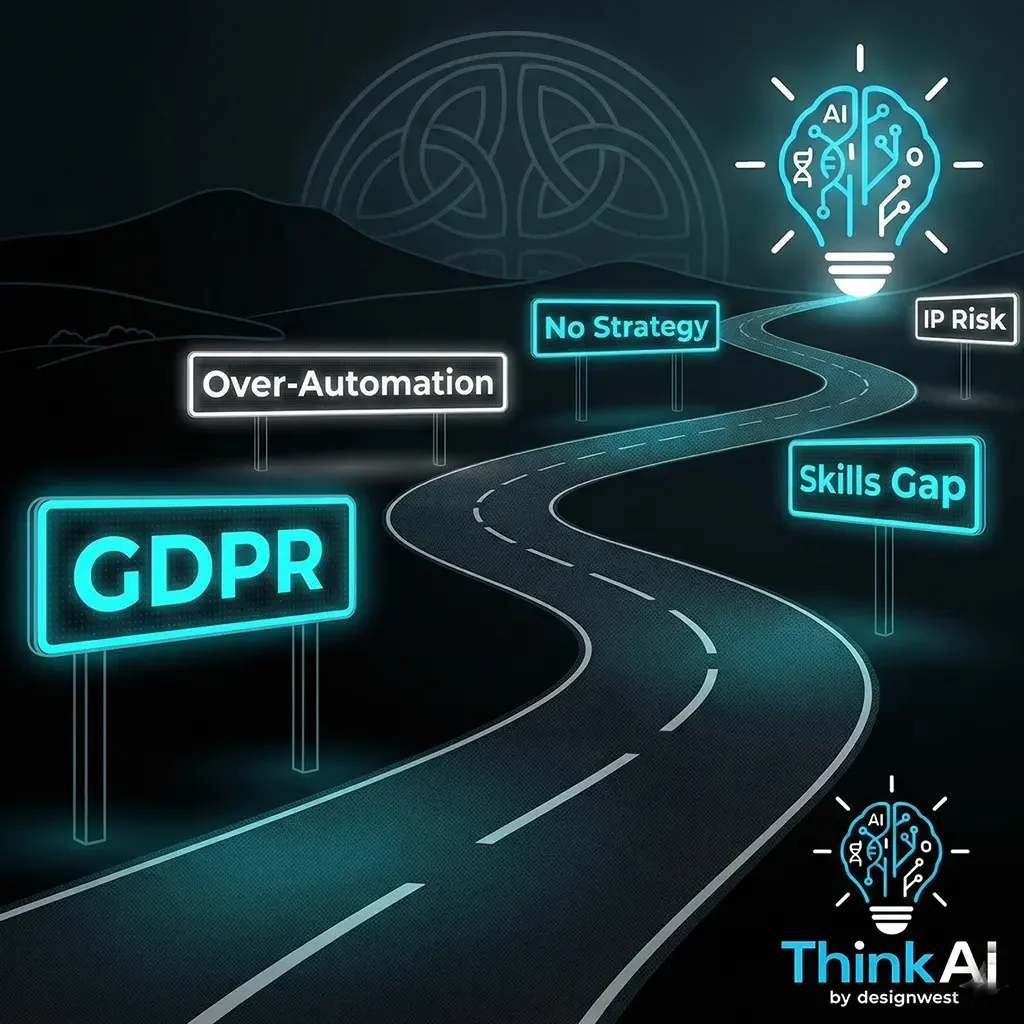
This post outlines the top five AI adoption mistakes Irish SMEs and professional services firms must avoid—backed by Irish examples, GDPR context, and ThinkAI’s human-in-the-loop best practices.
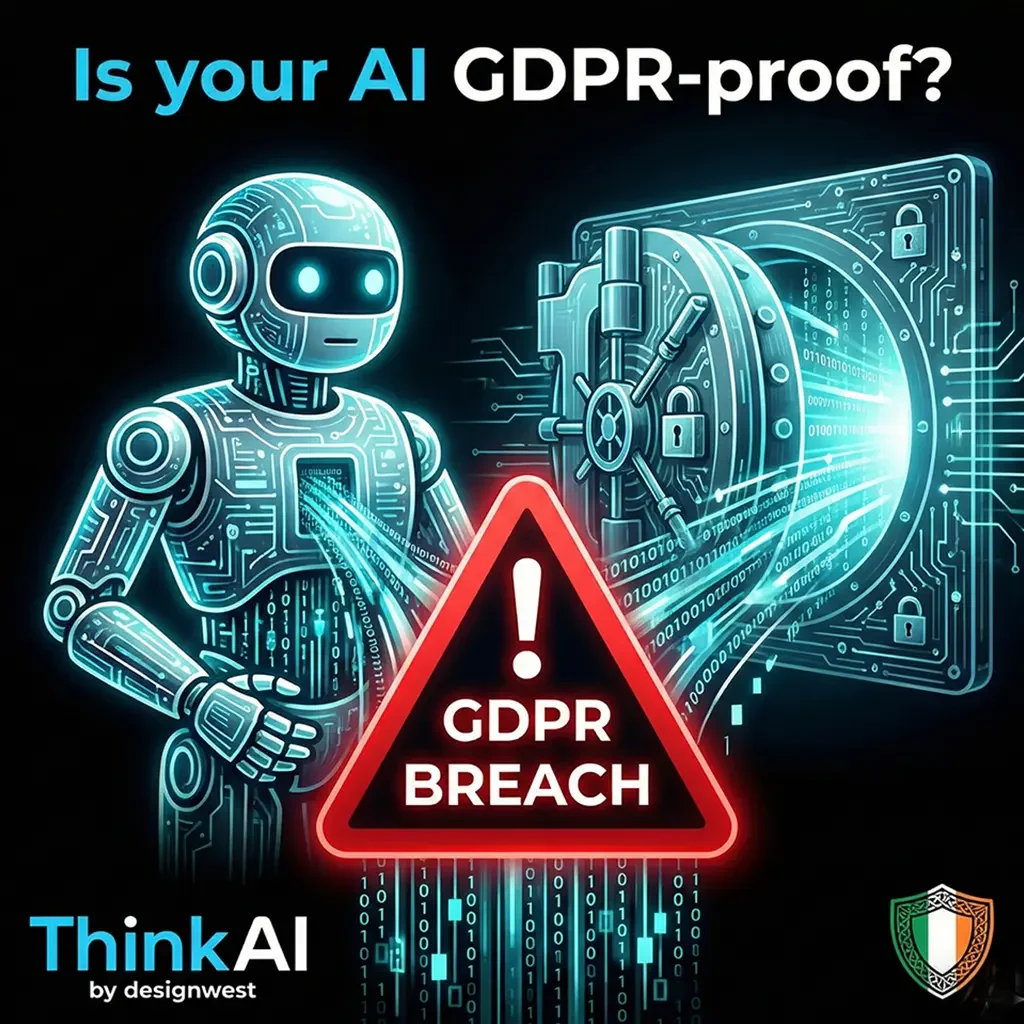
AI tools that process customer data must comply with GDPR. Missteps like collecting identifiable info without consent, storing data too long, or using unvetted overseas AI vendors can result in hefty fines.
Avoid it by:
Getting explicit user consent for data-collecting AI tools (e.g., chatbots).
Setting auto-delete rules to comply with data minimisation.
Using GDPR-compliant vendors (especially if outside the EU).
Conducting Data Protection Impact Assessments (DPIAs) for high-risk use cases.
Fully automating high-impact decisions (e.g., hiring, credit scoring) without a human-in-the-loop is not only risky—it’s often illegal under GDPR Article 22.
Avoid it by:
Reviewing all AI-generated decisions with a human layer.
Clarifying explainability of AI outputs.
Flagging edge cases for human handling.
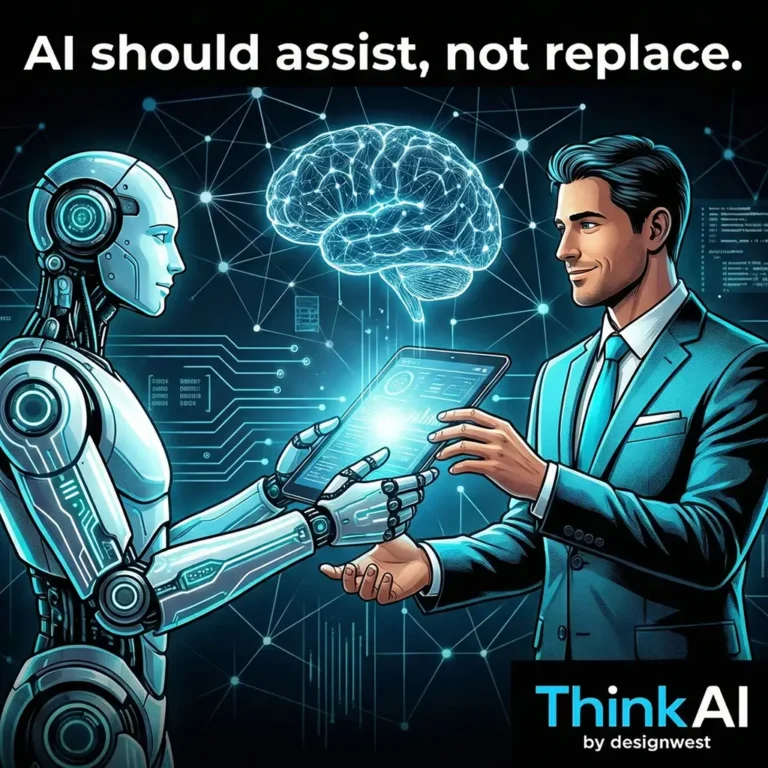
ThinkAI uses a co-pilot model: AI assists, humans decide. This protects against errors and aligns with EU compliance.
AI works best when teams know how to use it safely. Without clear guidance, employees may:
Input sensitive data into public tools (“shadow AI”)
Misuse outputs
Avoid AI entirely due to fear
Avoid it by:
Upskilling staff with Irish AI training supports (e.g., Skillnet, Enterprise Ireland)
Publishing clear AI usage policies
Hosting AI workshops and feedback sessions
Using generative AI to create content, code, or images? You might:
Replicate copyrighted material inadvertently
Have no ownership over raw AI outputs (EU law often denies copyright to non-human work)
Avoid it by:
Using tools trained on licensed datasets (e.g. Adobe Firefly)
Adding human creativity to final outputs
Running content through originality checks
ThinkAI only uses commercially safe tools and helps clients retain IP ownership through human-in-the-loop workflows.
Alt text visual: Copyright risk matrix showing safe vs risky AI content practices.
“Let’s try AI” is not a strategy. Irish businesses often trial AI without:
Defined goals
Success metrics
Integration plans
Avoid it by:
Identifying business pain points where AI helps
Starting with small pilots (e.g., automating one client process)
Measuring impact (e.g., cost saved, time reduced)
Aligning projects with existing business strategy
Conclusion: AI Done the Right Way in Ireland
Responsible AI adoption requires planning, people, and compliance. By avoiding these five pitfalls and aligning with frameworks like GDPR, the EU AI Act, and ThinkAI’s best practices, Irish SMEs can harness AI without the legal and operational headaches—with the right support from expert AI consulting Ireland providers to guide strategy and execution.
To explore how your business can implement AI safely and effectively, you can get in touch with ThinkAI for a tailored consultation.
FAQ: AI Adoption Mistakes in Ireland
AI tools processing personal data must comply with GDPR. Businesses must obtain consent, minimise data use, and ensure vendors meet EU transfer rules.
Use consent prompts, limit data retention, vet third-party vendors, and complete DPIAs for high-risk systems.
It ensures AI decisions are overseen or reviewed by humans, especially for high-impact or legally sensitive decisions.
Not fully. AI can screen CVs, but Irish businesses must allow human review and explain decisions under GDPR Article 22.
Provide practical upskilling, create usage policies, and run internal workshops. Leverage Irish supports like Skillnet AI modules.
When staff use public AI tools without oversight. It can lead to data leaks or compliance issues.
In many cases, no one owns it if it lacks human creativity. To claim copyright, add meaningful human input.
Yes, but always human-edit for originality, brand tone, and legal safety.
Tools trained on licensed/public datasets, e.g. Adobe Firefly. Avoid free tools with unclear training data.
Use plagiarism checkers and reverse image search. Watch for signatures or familiar phrases.
It’s a national initiative offering resources, events, and support for AI adoption among Irish SMEs.
Yes. Enterprise Ireland, Digital Discovery Grants, and LEOs offer funding and mentoring.
Absolutely. Irish retailers use AI for demand forecasting, reducing stockouts and optimising inventory.
Yes. “Let’s try AI” isn’t a plan. Tie AI to business goals with defined success metrics.
Start small (e.g., chatbot on FAQ page), monitor results, and scale once ROI is proven.
A coming regulation that will impose rules based on AI system risk. High-risk systems must have more oversight.
A Data Protection Impact Assessment required by GDPR for high-risk data projects (like profiling AI).
If outputs disproportionately favour/disfavour groups. Regular testing and human audits are key.
Yes. Use explainable AI (XAI) tools or at least offer plain-language explanations to users.
Clear rules on what AI tools are allowed, what data can be used, review requirements, and ethical boundaries.
Human-in-the-loop AI services, IP-safe content creation, LLM optimisation, strategy workshops, and training for Irish SMEs.
No. These require expert input. AI can summarise or assist but must not replace qualified professionals.
Yes. Always fact-check AI outputs. Hallucinations are common in generative models.
Yes, if it collects names, contact info, or other identifiable data.
It depends. Pilot projects can be low-cost. Government supports and phased rollouts help control budgets.
Only if meaningful human creativity is added. Pure AI images may lack protection under Irish and EU law.
Large Language Model Optimisation—making your business content discoverable and citeable by AI tools like ChatGPT.
Proactive. They use licensed tools, advise on GDPR and copyright, and offer AI governance playbooks.
Regular audits, staying updated on laws (GDPR, AI Act), and continuous team training.
ThinkAI offers strategic support, Irish business-focused AI roadmaps, and compliance-safe implementations.