


Why AI Automation Is a Game-Changer for Irish SMEs
Artificial intelligence (AI) is no longer just for tech giants. Across Ireland, small and medium‑sized enterprises (SMEs) are exploring AI automation and robotic process automation (RPA) to save time, cut costs, and improve customer experiences. A 2025 survey by the Small Firms Association found that nine out of ten small businesses already use some form of AI. The most common applications are automating simple administrative tasks (66 % of respondents) and producing data analytics reports (44 %). Despite this interest, adoption remains shallow—only 9 % of Irish firms report widespread use of AI agents—and many businesses cite lack of technical expertise, unclear strategies, and data‑quality issues as barriers.
This blog post demystifies AI automation for Irish SMEs. It explains the benefits, explores practical use cases, highlights government supports and addresses common concerns. Where relevant, it reflects ThinkAI’s Service Authority FAQs and the scope boundaries described in our training documents. Throughout this post, remember that AI is a tool to augment people, not replace them; human oversight, ethical use and data privacy are central to every solution we provide.
Why AI automation matters for Irish SMEs
Irish companies face tight budgets and intense competition—especially local cafés, craft shops, and professional services. Intelligent process automation levels the playing field by streamlining repetitive tasks, while AI automation allows employees to focus on high‑value work. Recent insights show that:
- Time savings: AI tools can significantly reduce administrative overhead. AI Ireland reports that autonomous background processes can cut manual bookkeeping time by about 80 %, while automation of administrative tasks can save up to 30–40 % of administrative expenses.
- Widespread experimentation: Although only 9 % of firms have fully scaled AI agents, 70 % of Irish businesses plan to boost AI budgets by 2026. This shows strong momentum toward practical AI solutions.
- Focus on automation and analytics: The SFA survey found that two‑thirds of small firms use AI to automate simple tasks and nearly half use it for data analytics.
- Challenges remain: Poor data infrastructure is the primary hurdle for 40 % of business leaders. Other obstacles include lack of skills and unclear strategies.
The opportunity is clear: with the right approach, AI can help Irish SMEs become more efficient, responsive and competitive.
Practical AI automation use cases
Chatbots are one of the easiest entry points for AI. AI‑powered chatbots can answer frequently asked questions, book appointments and handle common customer queries 24/7. A family‑run hotel in Kerry reduced phone calls by 45 % after deploying a booking chatbot. At ThinkAI, chatbots are always human‑supervised and comply with our Generative AI for Creative Content & Design policy: they use AI to assist rather than replace human agents, never impersonate real individuals and never generate unauthorized content.
AI can personalise marketing by segmenting email lists, predicting which recipients are likely to respond and generating subject lines or copy drafts. Generative models draft initial content, but human marketers refine, fact‑check and approve it—ensuring brand voice and compliance. This aligns with our AI‑Driven Content & SEO Strategy FAQ, which emphasises that AI‑written content is always human‑edited and reviewed for tone, accuracy and search intent.
Search behaviour in Ireland is evolving. Voice queries and AI‑powered search engines (e.g., ChatGPT, Gemini) now recommend local businesses directly. AI‑driven SEO tools help identify high‑intention keywords, plan content clusters and draft articles that answer real customer questions. ThinkAI’s SEO service includes semantic keyword research, competitor gap analysis and content calendars, followed by human editing and metadata optimisation—aligned with Google’s E‑E‑A‑T guidelines. Importantly, we avoid keyword stuffing or spam; AI is a drafting aid, not a substitute for strategic thinking.
Large language model optimisation (LLMO) focuses on making your business discoverable in AI chat answers, which differs from traditional SEO. LLMO involves structuring your site with schema markup and clear “About” content so that AI agents like ChatGPT can accurately recognise and cite your business. It cannot guarantee a top ranking—there is no paid placement in AI answers—but it can improve your chances. Our AI Search Optimisation FAQ clarifies that we do not manipulate reviews or force specific AI responses; we follow ethical best practices and abide by EU AI and advertising regulations.
Generative AI can assist designers by producing concept art, storyboards, marketing copy drafts and layout variations. Per our service guidelines, AI complements rather than replaces human creativity. Outputs are always reviewed, refined and finalised by humans, and we do not generate deepfakes, copyrighted characters or mimic specific artists without permission. Clients retain ownership of final deliverables subject to copyright law. AI‑generated content is disclosed as “AI‑assisted human creation,” never as wholly automated output.
Beyond chatbots and content, robotic process automation (RPA) and intelligent process automation can automate invoicing, payroll, inventory management, and other back‑office operations. Tools like Xero, QuickBooks, HubSpot, Calendly, and low‑code automation platforms integrate with existing systems to streamline workflows. ThinkAI’s Workflow Automation & Systems Integration service ensures alignment with your processes and compliance with GDPR and the EU AI Act, while delivering RPA & AI automation acceleration for measurable efficiency gains.
Retailers can use AI automation for dynamic pricing, inventory forecasting, and personalised product recommendations. According to the SFA survey, Irish retailers have been slower to adopt AI, suggesting huge untapped potential. Our AI‑Powered Web Design and Retail Authority services combine e‑commerce optimisation with ethical data usage and accessibility standards. Many businesses are now leveraging robotic process automation (RPA) to streamline operations. For example, AI‑driven recommendation engines increase sales without resorting to invasive surveillance or dark patterns.
How to adopt AI automation responsibly
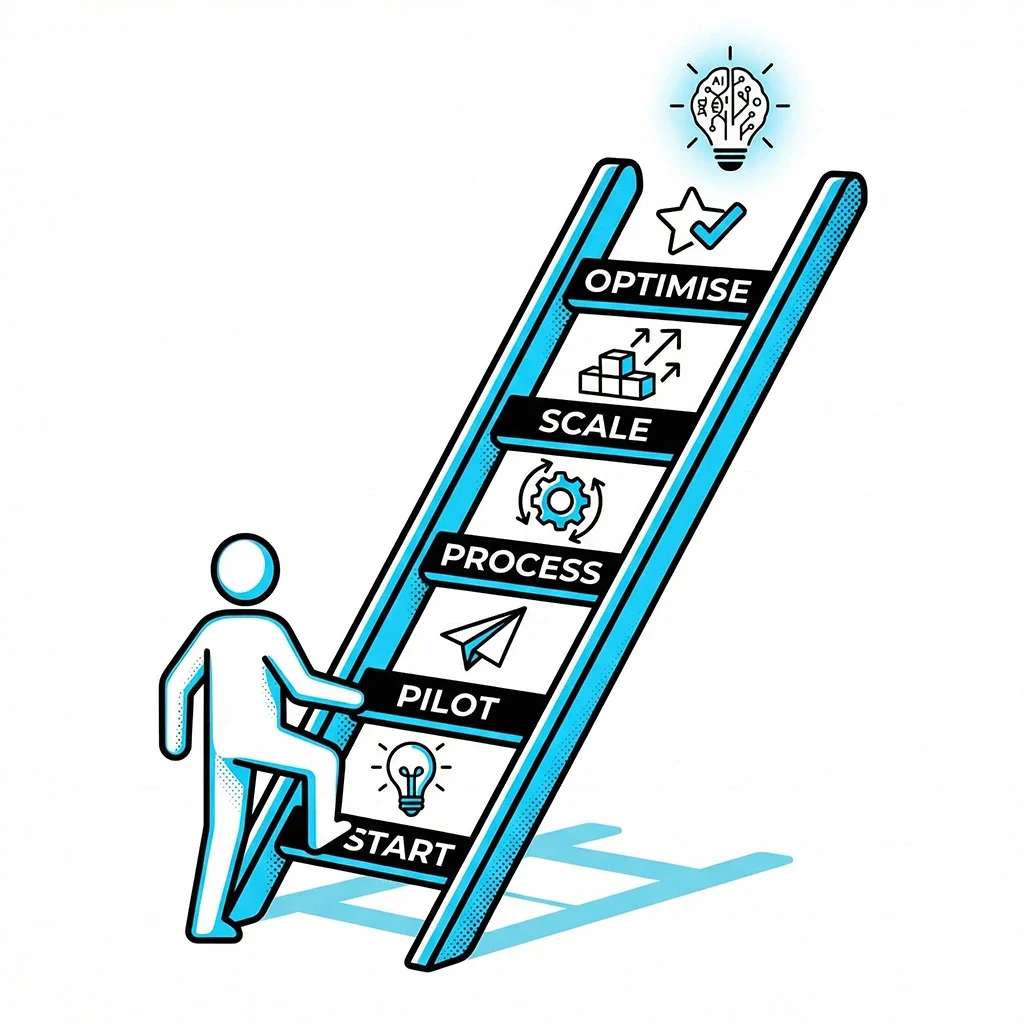
Implementing AI effectively requires planning and ethical considerations. Here is a roadmap for Irish SMEs:
- Identify pain points: Map out repetitive tasks (e.g., scheduling, data entry, stock management) and customer interaction bottlenecks. Start with one process and expand gradually. Pilot projects help validate ROI before broader rollout.
- Ensure data quality: Since 40 % of Irish leaders cite poor data infrastructure as the main barrier, invest early in clean, structured data. Use EU‑based cloud services (Azure Ireland, AWS Dublin) or on‑premises solutions to comply with GDPR.
- Choose the right tools: Decide between off‑the‑shelf AI services and custom development. Low‑code platforms and subscription chatbots are affordable entry points; bespoke solutions offer more flexibility but require larger budgets. Simple pilots can cost €5–10 k, while small‑scale production systems range from €25–50 k.
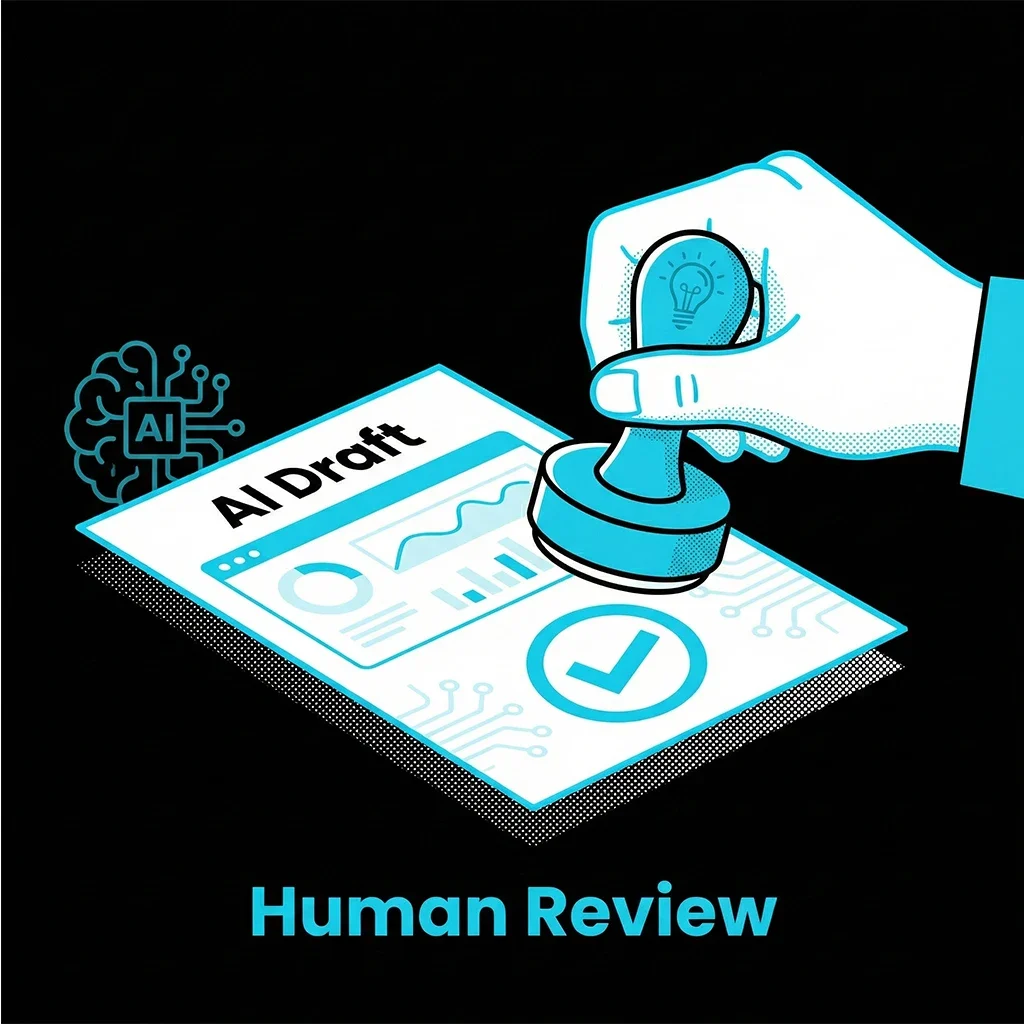
- Keep humans in the loop: AI should assist, not replace. Our policies prohibit AI from providing legal or pricing guarantees, generating deepfakes, or making decisions without human approval. Train staff to supervise AI outputs and intervene when necessary.
- Comply with regulations: Stay up‑to‑date with GDPR, the upcoming EU AI Act and local consumer laws. Never upload sensitive personal data without consent and avoid using unlicensed celebrity voices or copyrighted material.
- Leverage government supports: Programmes such as Enterprise Ireland’s AI Discovery voucher (which covers 80 % of a scoping study) and the Digital for Business voucher can subsidise planning and development. The National Training Fund and Local Enterprise Offices also offer grants for digital upskilling.
- Partner with experts: Collaborate with experienced AI consultants who understand both technology and local regulations. At ThinkAI, we combine technical expertise with sector‑specific knowledge to deliver ethical, scalable AI solutions.
Challenges to be aware of
While AI automation offers significant benefits, SMEs should be mindful of:
- Data privacy and security: Always encrypt data and use reputable vendors. Consider anonymising personal data and limiting sensitive information sent to external APIs.
- Hidden costs: Beyond subscription fees, budget for data preparation, integration, compliance, monitoring and maintenance. Expect to allocate 15–25 % of project cost to data preparation and 10–20 % per year for ongoing monitoring.
- Skills gap: Lack of technical expertise is a top barrier. Invest in training and seek advisory support to build confidence in adopting AI.
- Ethical constraints: Do not use AI to generate deepfakes, impersonate voices, mimic artists’ styles without permission or spam keywords. Always respect intellectual property and obtain consent.
Frequently Asked Questions (FAQs)
AI automation involves using software agents and machine‑learning models to handle repetitive tasks (such as customer service, data entry or basic analytics) so that human staff can focus on strategy, creativity and customer relationships. In ThinkAI’s framework, it includes chatbots, generative content assistants, workflow integration and data‑driven insights.
Not necessarily. Most SMEs start with affordable tools (e.g., chatbots or email automation) that cost only a few hundred euros per month. Pilot projects can run between €5 k and €10 k, while small production systems range from €25 k to €50 k. Off‑the‑shelf tools are user‑friendly and require minimal coding. Custom solutions require more investment but offer greater flexibility.
AI is designed to handle routine tasks so your team can concentrate on high‑value work. According to the SFA survey, Irish SMEs primarily use AI for simple automation and analytics; human judgment remains essential for customer service, strategy and creativity.
AI tools analyse search intent, plan content clusters, suggest keywords and draft content. They also optimise website metadata and suggest schema markup to help search engines and AI agents understand your business. However, humans must review and polish the content, and AI cannot guarantee top rankings.
Yes. Enterprise Ireland’s AI Discovery voucher covers 80 % of a feasibility study, and Local Enterprise Offices offer digital vouchers. The Small Firms Association also advocates using the National Training Fund for upskilling. Invest NI provides similar support in Northern Ireland.
SEO focuses on ranking websites in search engines like Google. Large Language Model Optimisation (LLMO) optimises your digital footprint—through structured data, clear language and authoritative content—so that AI assistants (e.g., ChatGPT) can find and cite your business. LLMO does not guarantee placement; it simply increases visibility.
No. AI can draft content, but our Generative AI for Creative Content & Design policy states that humans must direct, refine and approve everything. AI should never generate copyrighted characters, deepfakes or specific artists’ styles without consent. Outputs are always labelled as “AI‑assisted.”
When implemented correctly, AI systems can be secure. Use EU‑based data centres or on‑premises hosting to remain GDPR‑compliant, encrypt data in transit and at rest, and avoid sharing sensitive personal information. Review vendor security policies and maintain human oversight.
Conclusion
AI automation offers Irish SMEs a powerful toolkit to streamline operations, enhance customer experiences and improve competitiveness. The majority of small firms already use AI tools, primarily for simple automation and analytics, and most plan to increase their AI budgets. Yet adoption remains shallow due to data‑quality issues and skill gaps. By starting small, investing in data readiness, maintaining human oversight and leveraging government supports, your business can unlock substantial value.
At ThinkAI, we help SMEs navigate this journey responsibly. Our services—from Generative AI for Creative Content & Design to AI‑Driven Content & SEO Strategy, AI Search Optimisation, Workflow Automation & Systems Integration, and Industry‑specific solutions—are built on ethical guidelines and human‑first principles. If you’re ready to explore how AI automation can drive success for your Irish business, get in touch with us today.
